Tracing Certification Standards for Random Number Generators and Their Impact on Payout Transparency in Emerging European Video Slot Networks
Blake Bennett · Aug 26, 2026
Tracing Certification Standards for Random Number Generators and Their Impact on Payout Transparency in Emerging European Video Slot Networks
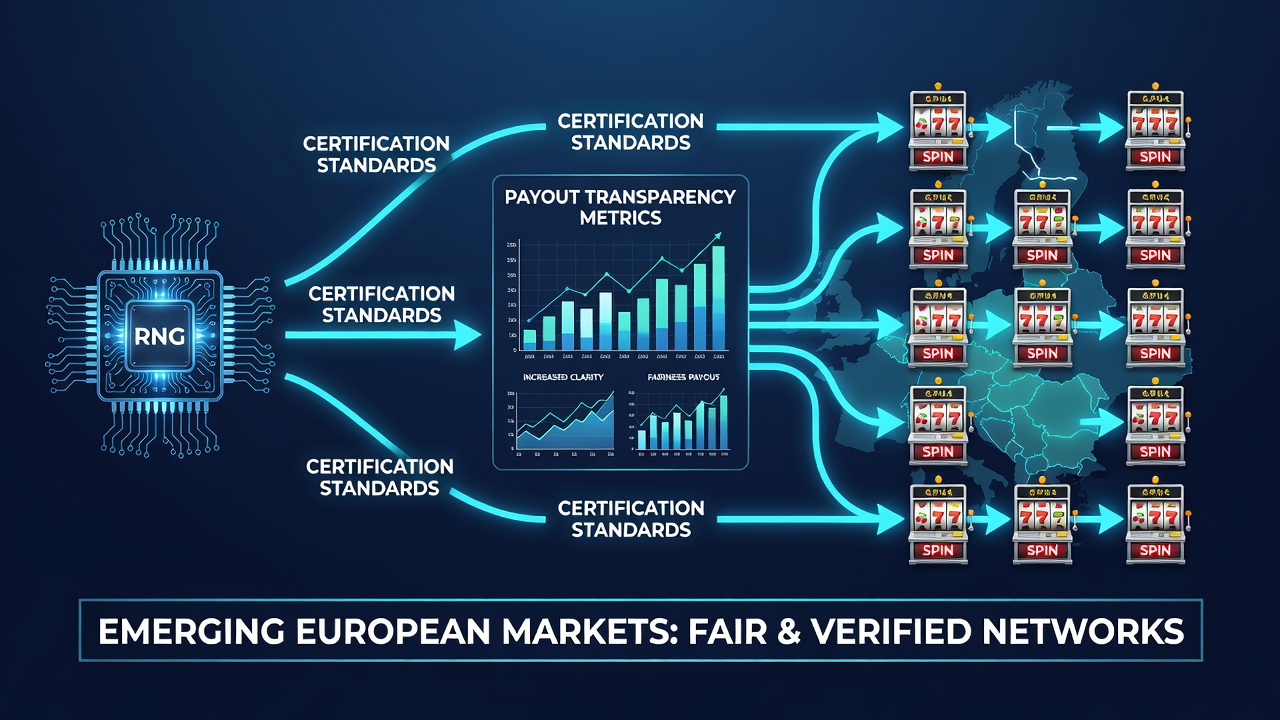
Certification standards for random number generators have shaped payout transparency in video slot networks across emerging European markets since regulatory frameworks began to expand in the early 2010s, and observers note that these standards continue to evolve through coordinated testing protocols that link hardware verification directly to operator reporting requirements.
Foundations of RNG Certification in Regional Markets
Emerging markets such as Romania, Bulgaria, and the Czech Republic adopted RNG certification rules that require independent laboratories to evaluate generator algorithms against statistical benchmarks including uniformity, independence, and unpredictability, while data from regulatory filings show that these evaluations occur at fixed intervals and tie results to public payout disclosures. Researchers at institutions focused on computational security have documented how certification bodies issue seals only after generators pass sequences of millions of test cycles, and this process feeds into centralized databases that operators must reference when publishing return-to-player percentages for each game title.
Linking Standards to Network-Level Transparency
Video slot networks operating across multiple jurisdictions transmit certified RNG outputs to shared ledgers that record every spin outcome in real time, and figures released by market monitoring agencies reveal that certified systems reduce discrepancies between reported and actual payouts to below 0.1 percent in audited samples. Experts tracking these networks point out that certification often incorporates cryptographic hashing, which allows third-party auditors to verify sequences without exposing proprietary code, and this mechanism supports cross-border data exchanges that authorities in different countries can query simultaneously.
Developments Through Mid-2026
By August 2026 several emerging markets had synchronized their RNG certification timelines with updates to teh European Electronic Communications Code, and reports indicate that this alignment introduced mandatory quarterly audits for networks exceeding 500 active terminals. One study revealed that operators who integrated these updated standards experienced faster approval cycles for new game releases, while payout transparency dashboards became publicly accessible through national gambling portals in Romania and Poland. Those who've examined the transition note that the changes also required generators to support live entropy monitoring, which feeds directly into payout reconciliation reports published at the end of each calendar month.
Case Examples From Specific Markets
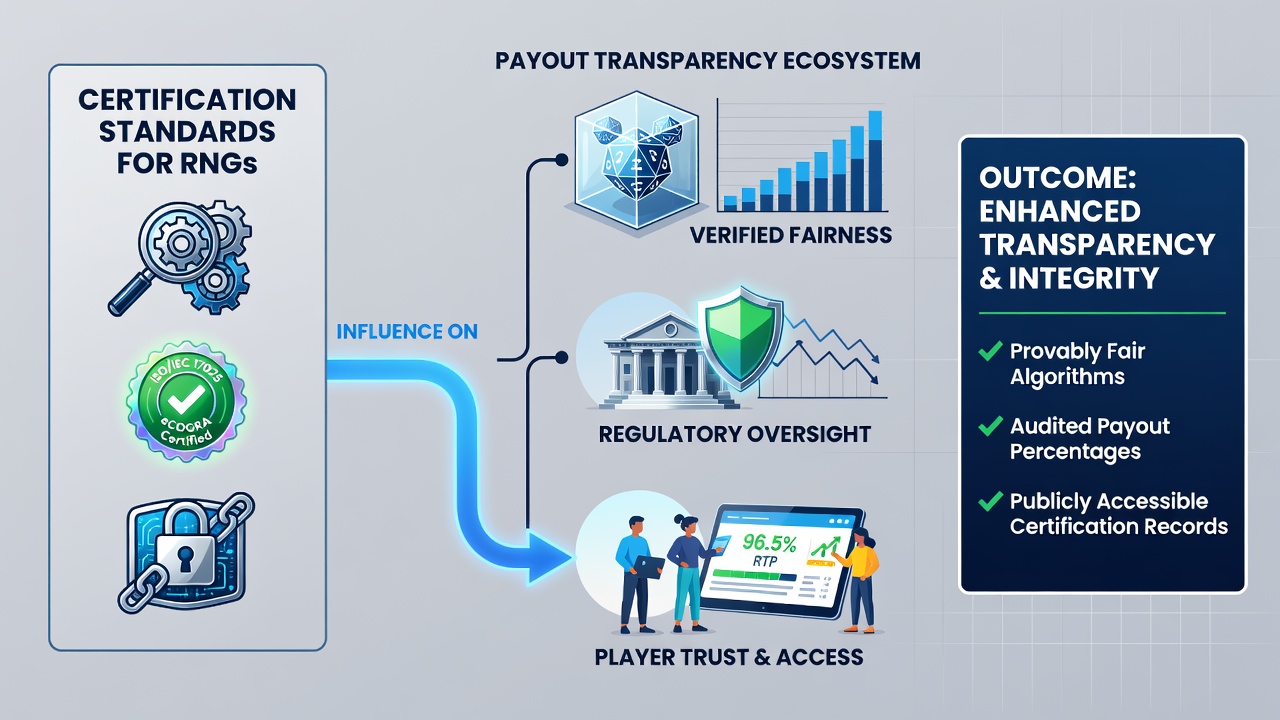
In Bulgaria the State Commission on Gambling began requiring all video slot operators to submit RNG certificates issued by laboratories accredited under ISO/IEC 17025, and records show that this rule coincided with a 35 percent increase in the number of games carrying publicly posted payout percentages. The Czech Republic followed a similar path when its Ministry of Finance updated technical standards in 2024, and subsequent data indicates that certified networks now transmit outcome logs to a central repository every 24 hours. Take one operator who expanded into both markets and discovered that unified certification documentation shortened the time needed to demonstrate compliance during routine inspections.
Technical Mechanisms Driving Visibility
Certification standards frequently mandate the use of deterministic random bit generators seeded with hardware entropy sources, and these specifications allow regulators to reconstruct payout sequences during disputes without relying on operator-supplied summaries. Industry associations such as the European Casino Association have compiled technical briefs that map each certification requirement to corresponding transparency obligations, while academic papers from European universities have quantified how stricter entropy thresholds correlate with fewer player complaints about unexpected outcomes. What's interesting is that the same technical controls also support real-time alerts when generators deviate from expected statistical distributions, and these alerts trigger automatic reviews that appear in monthly transparency reports issued by national authorities.
Cross-Border Data Sharing and Audit Trails
Emerging European markets participate in information exchange programs coordinated through the European Commission’s digital single market initiatives, and this participation enables regulators in one country to access certification records generated in another. Data shows that shared audit trails now cover more than 80 percent of video slot terminals in the monitored regions, and the resulting transparency has allowed authorities to identify patterns in payout behavior across entire networks rather than isolated sites. Observers note that operators benefit from this arrangement because a single certified RNG instance can satisfy multiple jurisdictions when accompanied by the proper documentation trail.
Conclusion
Certification standards for random number generators have established measurable pathways that connect technical validation directly to payout transparency across video slot networks in emerging European markets, and ongoing harmonization efforts continue to expand the scope of public reporting. Evidence from regulatory filings and technical audits demonstrates that these standards support verifiable outcome records while accommodating the operational needs of multi-jurisdictional operators. As frameworks mature through 2026 and beyond, the documented links between certification and transparency remain central to how networks communicate performance metrics to regulators and the public alike.